

Essential Insights for Effective Junk Removal Strategies
- Wondering what to do with that old fridge or stove? This guide walks you through all your options for responsible and convenient appliance removal.
- Learn how to assess your appliances: Are they destined for the landfill, ripe for recycling, or worthy of a second life through donation or resale?
- Discover safe handling practices and disconnection tips to prevent accidents and ensure your old appliances are removal-ready.
- Explore disposal avenues: From curbside pickup and drop-off centers to professional junk removal services – discover what suits your budget and needs.
- Understand the environmental impact of appliance disposal and the importance of recycling for a greener approach.
Introduction
Getting rid of old appliances can seem daunting—they’re big, bulky, and potentially hazardous. But don’t worry! Whether your old appliance is bound for scrap metal, local charities, or professional pick-up services, this guide makes the process easy.
Understanding Appliance Removal Options
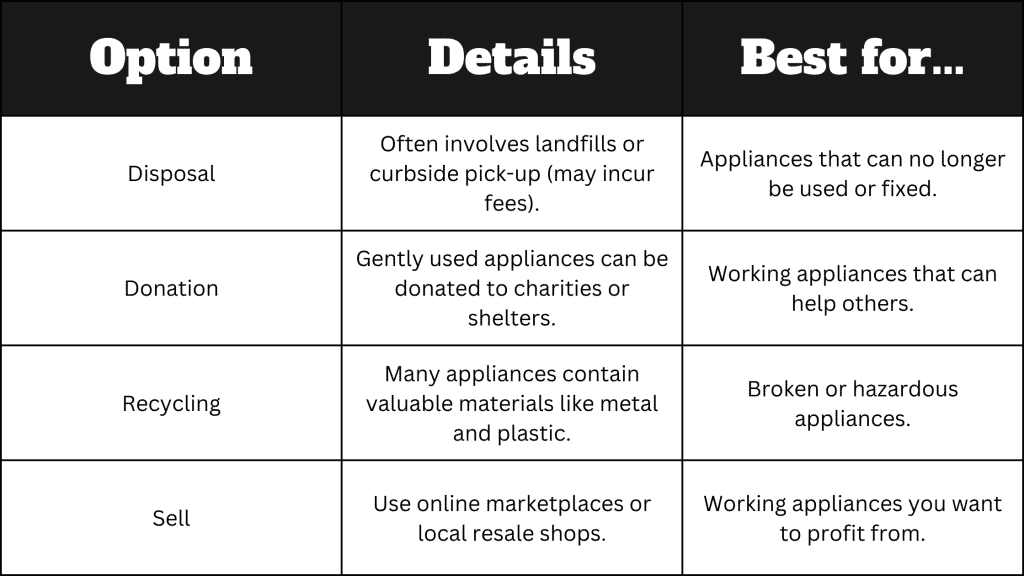
Before throwing away that old washing machine or fridge, consider all your options. Appliances require specialized disposal, but there are ways to responsibly donate, recycle, or remove them. Here’s a breakdown:
Evaluating the Condition of Your Appliance for Best Disposal Method
Your appliance’s condition will determine the best course of action. Is it in working condition? Does it contain hazardous materials like refrigerants? Follow these steps:
- Working Appliances: Consider selling them online or donating to local charities.
- Non-Working or Hazardous Appliances: Prioritize recycling to prevent environmental damage.
- Store Take-Back Programs: Some retailers offer take-back services when you buy a new appliance.
Preparing Appliances for Removal
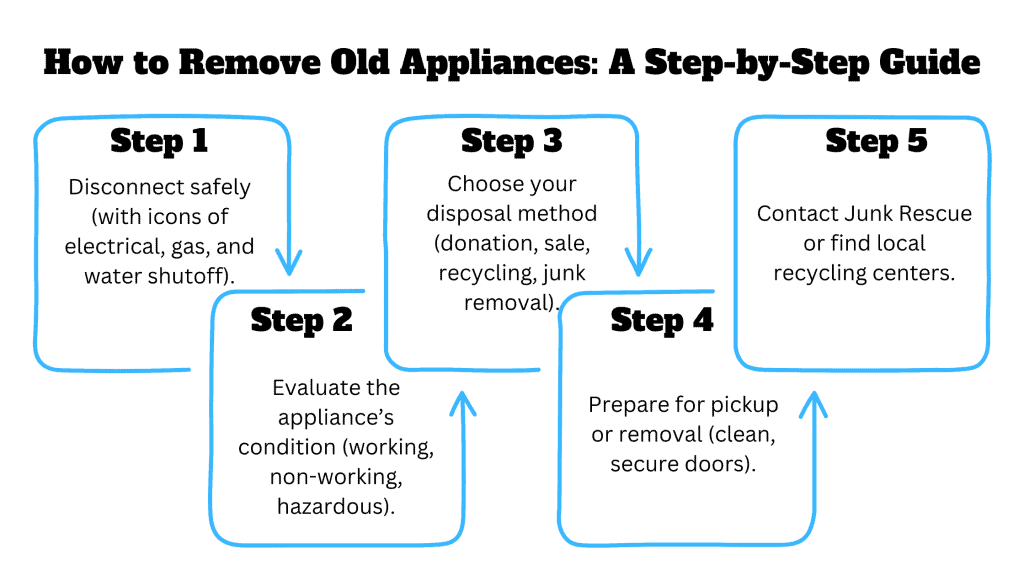
Prepping your appliance properly ensures smooth removal. Follow these essential safety steps:
Disconnecting Safely
- Power Off: Unplug or disconnect the power supply. For hardwired appliances, turn off the circuit breaker.
- Gas Shutoff: For gas appliances, turn off the valve behind the appliance.
- Water Lines: Shut off water supply for washing machines and dishwashers.
Cleaning and Securing
- Clean both inside and outside of the appliance.
- Secure doors and drawers with tape or bungee cords to prevent damage during transport.
Selling or Donating Your Old Appliances
If your old appliances are in good condition, selling or donating them can be a great way to declutter your home while helping others.
Safety Tips for Disconnecting Appliances
Disconnecting your appliances might look easy, but being safe is very important. This helps you avoid accidents or damage. Always start by turning off the power. If the appliance has a standard plug, unplug it. If it does not, turn off the circuit breaker at your electrical panel.
For gas appliances, find the shut-off valve. This valve is often behind the appliance or along the gas line. Turn the valve to the right to close it tightly. This will stop gas from flowing. Finally, if your appliance is connected to water lines, like a washing machine or dishwasher, turn off the water supply valve. You can usually find this valve behind the appliance or under the sink.
Doing these things helps keep you safe. It also stops any problems when getting the appliance ready for removal. If you feel unsure about any step, it’s okay to reach out to a qualified professional for help.
Cleaning and Securing Appliances for Pickup
Prepping your appliance before it leaves is more than just disconnecting it. A bit of cleaning and securing can help a lot! A quick wipe of the inside and outside makes the removal process easier for everyone. This is especially true if you choose junk hauling services or want to donate the appliance.
To keep doors or drawers from swinging open while transporting, use tape or bungee cords to secure them. This tip is useful for larger appliances like refrigerators. It not only makes handling the appliance easier but also helps prevent damage.
If you are using junk removal companies, keep in mind that their pricing may depend on how easy it is to remove the appliance. A clean and secured appliance will help make the process smoother.
Selling or Donating Your Old Appliances
If your old appliances are in good working condition, selling or donating them is a great way to keep them useful and clear out your home.
Selling them can earn you some cash. Donating gives you a chance to help others and could lead to a tax deduction. Let’s look at these choices in more detail.
Where to Sell Working Appliances
Selling appliances that are in good working condition is a great way to get some money back when you upgrade. There are many places where you can find buyers who are looking for these items.
| Platform | Description |
| Craigslist | Popular online marketplace for selling used items. |
| Facebook Marketplace | Reach buyers locally via Facebook. |
| OfferUp | App-based platform that connects buyers and sellers locally. |
| Local Resale Shops | Many stores specialize in secondhand appliances. |
When you sell, make sure to include clear photos, detailed descriptions (such as brand, model, age, and any known issues), and good pricing. This will help you attract buyers and make the selling process easier.
Charities That Accept Appliance Donations
Donating your gently used appliances is a great way to clear out space and help others. Many organizations accept appliances to give to families or people who need them.
| Charity | Details |
| Salvation Army | Offers free pick-up for appliance donations. |
| Habitat for Humanity ReStores | Appliances sold fund affordable housing initiatives. |
| Local Shelters | Contact local shelters or churches for donation policies. |
The Salvation Army is well-known for taking different donations, including appliances. They often provide pickup services, which makes it easier for you. Habitat for Humanity ReStores are another good choice; they take appliances and use the money to help build affordable homes.
Additionally, local charities, shelters, and churches might be happy to accept your donations. It’s a good idea to check with them because their needs can change. Before you donate, make sure your appliances are clean, in good working condition, and safe to use.
Recycling Appliances Responsibly
Recycling your old appliances helps keep them out of landfills. If they go to landfills, they can harm the environment.
Modern appliances have many useful and reusable materials like metals, glass, and plastics. When we recycle, we save natural resources and lower the need for new materials. This way, we can reduce our impact on the environment.
Finding Local Appliance Recycling Programs
Locating a local appliance recycling program is often easier than you think. Numerous resources can guide you to the closest drop-off locations or schedule a pickup for your old appliances.
Your local recycling center is a great place to start. They usually have dedicated programs for bulky items like appliances. Another valuable resource is the EPA’s Responsible Appliance Disposal (RAD) program. This program partners with utilities and retailers to provide consumers with convenient and environmentally sound appliance disposal options.
| Resource | Resource |
| Local Recycling Centers | Check your city’s website or call to ask about drop-off locations. |
| EPA’s RAD Program | Helps you find local partners who recycle responsibly. |
| Utility Providers | Some energy companies offer recycling programs with rebates. |
| Retailers | Retailers |
The Importance of Proper Recycling
Properly recycling old appliances is important. It helps protect our environment and makes sure that hazardous materials are handled safely. For instance, refrigerators, freezers, and air conditioners often have refrigerants inside. If these refrigerants leak into the air, they can harm the ozone layer.
The EPA works hard to promote safe appliance disposal. They create rules and guidelines that encourage companies to make appliances that can be recycled. They also help provide safe ways for people to recycle their unwanted appliances.
When we recycle our appliances, we help create a healthier planet. We lower greenhouse gas emissions, save important resources, and keep ourselves and future generations safe from hazardous materials.
Hiring Professional Junk Removal Services
Sometimes, removing large appliances yourself is just too much hassle. That’s where professional junk removal companies like Junk Rescue can help.
Comparing Costs and Benefits
When you think about a junk removal service, it’s smart to look at costs and think about the benefits compared to other disposal methods. Prices can change a lot based on things like the number of appliances, their size, and how hard it is to remove them.
Some junk removal services have flat rates for certain appliance types. This gives you clear cost expectations right away. Other services charge based on how much space the items take up or how heavy they are.
| Service Type | Cost Range | Benefits |
| Professional Junk Removal | $75–$200 per appliance (based on size) | No lifting, easy scheduling, disposal handled. |
| DIY Recycling | Free or small fee (depending on location) | Environmentally friendly, no service fees. |
| Municipal Pickup | Free or low fee | Available through waste management services. |
Professional services handle all the heavy lifting and disposal, which can save you time and effort.
How to Choose a Reliable Service Provider
When choosing a junk removal service, trust and reliability are key. Junk Rescue offers fast, professional appliance removal in Philadelphia and New Jersey. Here’s what to look for:
- Customer Reviews: Check online ratings and testimonials.
- Transparent Pricing: Look for companies that provide upfront pricing.
- Responsible Disposal: Ensure they follow proper recycling protocols.
Municipal Pickup and Drop-off Options
Many towns provide easy and often cheaper ways to get rid of appliances. This can include pickup from the curb or places where you can drop them off.
It’s important to check with your local waste management department to learn about the rules and services you can use. Some cities might have certain days for picking up large items or rules about what types of appliances they will accept.
How to Arrange Curbside Pickup
- Check if your local waste management service offers curbside pickup for large items.
- Schedule a pickup through their website or call their service center.
- Ensure the appliance is disconnected and safely placed curbside on the scheduled date.
Local Drop-off Locations for Appliance Disposal
Drop-off centers are a convenient option if you prefer not to wait for curbside pickup. Click here to find local drop-off spots in Philadelphia and New Jersey.
Conclusion
In conclusion, getting rid of old appliances the right way is good for the environment and helps create more space in your home. You can choose to dispose of, donate, recycle, or sell your appliances. It’s important to handle them properly. Always keep safety in mind while getting ready for removal. You may also think about hiring professionals to help with the disposal process. By looking into your options and choosing the best way to handle them, you help support sustainable practices and may assist others who need it. Use this chance to clear out old appliances as a way to declutter and make a positive difference.
Frequently Asked Questions
How do I dispose of a refrigerator responsibly?
Refrigerators have refrigerants, such as Freon or CFC, that can hurt the ozone layer. You should never throw a fridge in a landfill without removing the refrigerant first. It is best to call a certified technician or reach out to your local recycling center to ensure safe and responsible disposal.
Can I donate an appliance that is not in working condition?
Most charities, like Goodwill, will only accept appliances that are in good working condition. Some local charities may take appliances that need small repairs or have a salvage program. It’s best to contact them directly to ask about their donation policies.
Are there any fees associated with appliance pickup services?
Some utility companies or local governments give free appliance disposal or pickup services. However, most junk removal companies will charge you a fee. This fee may change depending on how many items you have, their size, and the work needed. Always remember to ask about any possible fees before you agree to anything.